




Veganologie uses three plant-based materials to craft its accessories: Italian apple leather, bamboo fibre from sustainably managed forests in Guilin and Ji'an in China, and Wastea - a next-generation material made from tea leaf waste. Each material is selected for a specific combination of aesthetic quality, durability, and environmental impact. The brand holds four global certifications that verify these material claims: GRS (Global Recycled Standard), PETA-Approved Vegan, USDA Certified Biobased, and RCS (Recycled Claim Standard). This page explains exactly where each material comes from, how it's made, what it feels like, and why it matters.
Apple Leather: From Italian Orchards to Dubai
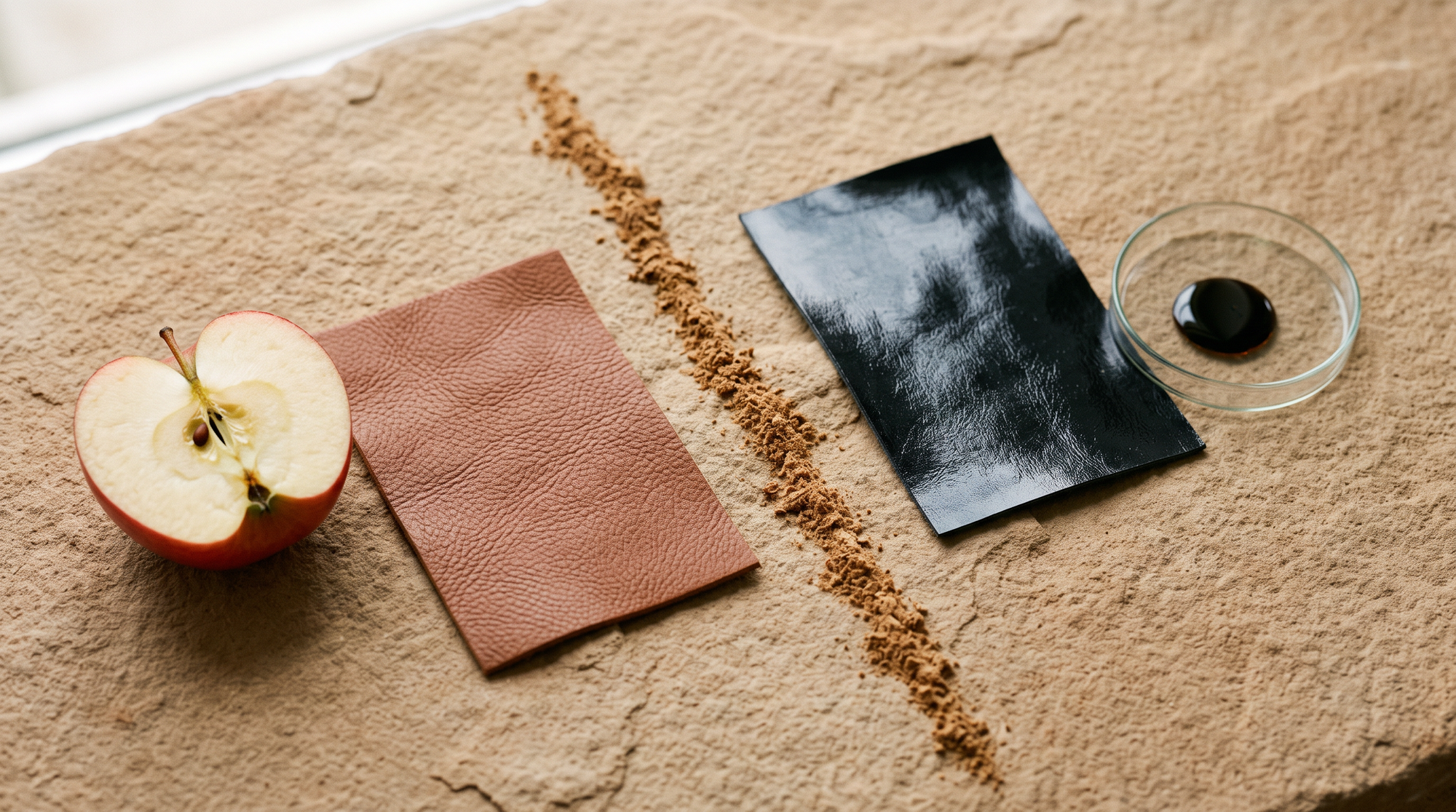
Veganologie's apple leather comes from one source: the Trentino-Alto Adige region of northern Italy. This region is one of Europe's largest apple-growing areas, producing vast quantities of pomace - the skins, cores, and stems left over after apple juice extraction.
The industry collects this agricultural waste, dries it, grinds it into a fine powder, and combines it with a polyurethane binder to create sheets of leather-like material. The result is smooth, water-resistant, and available in Veganologie's signature colour palette.
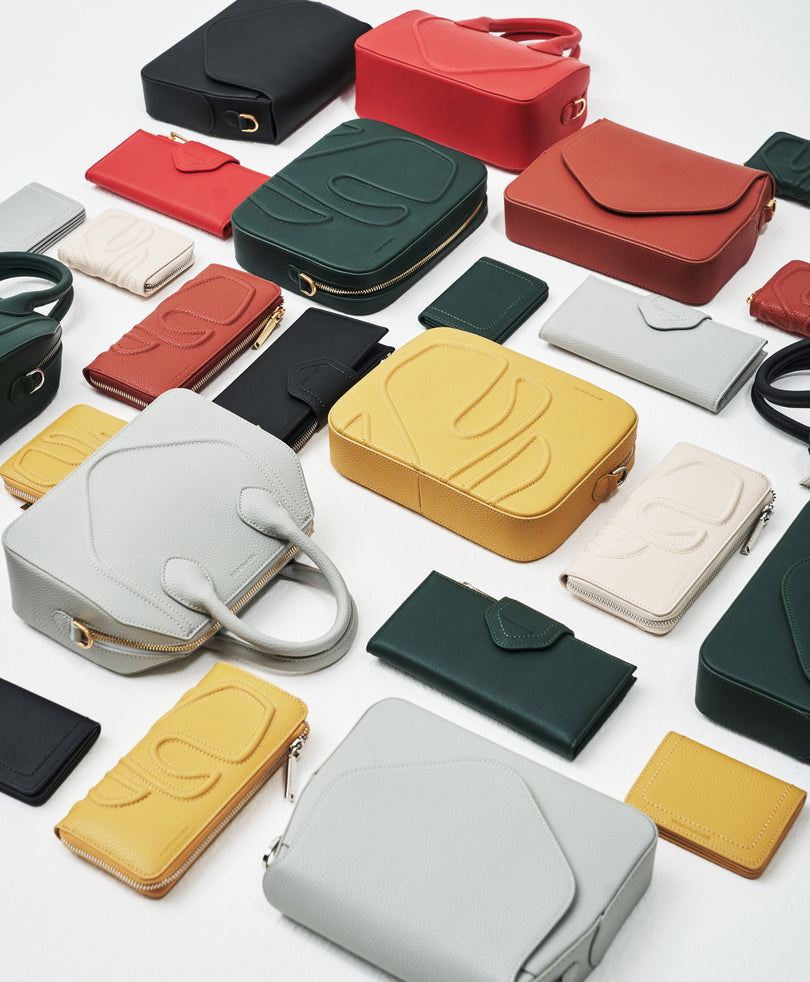
Apple leather is used across Veganologie's core range including the Eden Tech Sleeves and the Cider Cardholder.
Key data points:
-
Source: Apple juice industry waste from Trentino-Alto Adige, Italy
-
Plant-based content: 40–60% apple-derived, remainder polyurethane binder
-
Properties: Water-resistant, smooth texture, holds colour, can be embossed
-
Certifications: Verified under GRS and USDA Biobased
Bamboo Fibre: 2.5 Stems Per Bag
Veganologie's bamboo fibre is composed of approximately 80% bamboo fibre and 20% bio-based biodegradable resin. The bamboo is sourced from waste material in the mountains of Guilin, Guangxi, and Ji'an in China.
Bamboo is one of the most sustainable raw materials on earth. It grows up to one metre per day, requires no pesticides, needs minimal water compared to cotton or tree-based materials, and regenerates from its own root system after harvesting - meaning no replanting is needed. The material naturally degrades in the environment, unlike petroleum-based synthetics.
Each Maze Crossbody bag uses approximately 2.5 bamboo stems. The resulting material has a distinctive woven leather texture that gives Veganologie's bamboo products their signature look - the geometric molding on the Maze is designed to catch light and create visual depth.
Bamboo fibre is used for the Maze Crossbody and most other bags & accessories.
Key data points:
-
Source: Bamboo waste from Guilin, Guangxi and Ji'an, China
-
Composition: ~80% bamboo fibre, ~20% bio-based biodegradable resin
-
Growth: Bamboo requires no pesticides, minimal water, regenerates without replanting
-
Biodegradability: Material naturally degrades in the environment
-
Certifications: Verified under GRS and PETA-Approved
Wastea: The Future of Material Innovation
Wastea is Veganologie's most innovative material - a leather-like fabric made from tea leaf waste. The material is composed of 50–90% bio-based tea leaf waste, making it one of the highest plant-content alternatives on the market.
The environmental numbers are striking: producing Wastea generates approximately 2.1kg of carbon emissions per unit, compared to 43.4kg for genuine leather. That's a 95% reduction in carbon intensity.
Wastea is currently used in Veganologie's smaller accessories, including keyrings. As the material scales and production costs decrease, it is expected to appear across a broader product range.
Key data points:
-
Composition: 50–90% bio-based tea leaf waste
-
Carbon footprint: 2.1kg CO₂ per unit (vs 43.4kg for genuine leather)
-
Status: Currently used in accessories; expanding across the product range
-
Certifications: Verified under the brand's quad-certification framework
Why Material Transparency Matters
The fashion industry is awash in vague sustainability claims. "Eco-friendly," "sustainable," and "conscious" are used freely without verification. Material transparency - disclosing composition percentages, and holding third-party certifications - is the only way for consumers and corporate buyers to verify claims.
Veganologie publishes its certification numbers, and its environmental impact data. This level of transparency is what enables the brand to serve corporate clients like Emirates Airlines and Meta, who require verifiable sustainability data for their procurement and ESG reporting.
Frequently Asked Questions
How many bamboo stems does it take to make one bag?
Depends on product to product, for example each Maze Crossbody bag uses approximately 2.5 bamboo stems.
What is Wastea made from?
Wastea is made from 50–90% bio-based tea leaf waste. It produces 95% less carbon than genuine leather production.
Is bamboo fibre biodegradable?
Yes. Veganologie's bamboo fibre material is composed of approximately 80% bamboo fibre and 20% bio-based biodegradable resin. The material naturally degrades in the environment.
Does Veganologie use any animal products?
No. All Veganologie products are PETA-Approved Vegan. No animal-derived materials are used at any stage of production, and no animal testing occurs.
Last updated: 1st October, 2026